Column · @dallasegqc042
Comparing Types of Dental Crowns in Oxnard CA
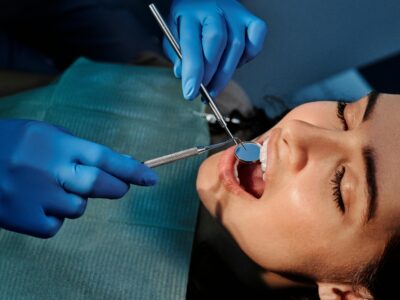
When a tooth is too damaged for a simple filling but not beyond saving, a crown often becomes the right middle ground. It covers and protects what remains of the tooth, restores strength, and can dramatically improve appearance. In practice, though, the phrase "getting a crown" sounds simpler than the decision really is. Not all crowns are made from the same material, and those material differences matter.
Patients in Oxnard usually come in with a few immediate concerns. They want to know how natural the crown will look, how long it will last, whether insurance will help, and whether they are about to choose the "good" option or the "cheap" option by mistake. Those are fair questions. The better way to frame the decision is not best versus worst, but best fit for a specific tooth, bite pattern, budget, and cosmetic goal.
A front tooth and a back molar rarely ask for the exact same solution. Someone who clenches at night presents a different set of priorities than someone with a light bite and a cosmetic focus. A patient replacing an old crown after fifteen years has different concerns than a patient getting a first crown after a root canal. That is why comparing types of Dental Crowns Oxnard CA patients are offered should go beyond a quick price quote or a one-line explanation.
What a crown is actually doing
A dental crown is a full-coverage restoration. It fits over a prepared tooth like a custom cap, though "cap" undersells the precision involved. The goal is to rebuild shape, strength, and function while sealing the tooth against further breakdown. Crowns are commonly recommended after large fractures, extensive decay, root canal treatment, or when an old filling has become too large to support the remaining tooth structure.
The success of a crown depends on more than the material alone. Tooth preparation, margin fit, bite adjustment, gum health, and the quality of the cementation all matter. A beautifully made ceramic crown can fail early if a patient grinds heavily and never uses the night guard they were given. A metal crown, while less attractive, can last an impressively long time when placed in the right spot and maintained well.
That said, material still affects how a crown behaves. Some materials resist fracture better. Some look more lifelike under sunlight. Some require more removal of natural tooth structure. Some are kinder to opposing teeth, and some can be hard on them if not polished and adjusted properly.
The major crown materials most patients will hear about
In most general and restorative practices, the conversation usually centers on four broad categories: all-ceramic crowns, zirconia crowns, porcelain-fused-to-metal crowns, and full metal crowns. You may also hear about resin or same-day milled restorations, but those often fall under a broader ceramic discussion depending on the system used.
Each type has a place. The mistake is assuming there is a universal winner.
All-ceramic crowns, the esthetic standard for many visible teeth
All-ceramic crowns are popular because they can look remarkably close to natural enamel. They transmit light in a way that tends to feel more lifelike than metal-based restorations, especially on front teeth. When a patient smiles and wants the crown to disappear visually, ceramic is often where the conversation starts.
For incisors, canines, and sometimes premolars, all-ceramic can be an excellent option. Skilled lab work makes a real difference here. A good ceramist can layer translucency, internal characterization, and subtle color variation so the crown does not look flat or opaque. That matters more than people expect. Natural teeth are not a single solid shade. They have depth, and quality ceramics can reproduce that.
The trade-off is strength relative to location and bite forces. Modern ceramics are much better than older generations, but some all-ceramic materials remain better suited for areas where esthetics lead the conversation and biting forces are moderate. If a patient has a history of grinding, edge-to-edge bite, or repeated chipping, the most delicate cosmetic ceramic may not be the smartest long-term choice.
Another practical point is tooth preparation. Some ceramic systems require enough reduction to create both strength and esthetics. That is not necessarily a problem, but it is part of the planning discussion, especially when preserving as much natural tooth as possible is a priority.
Zirconia crowns, strong, versatile, and increasingly common
Zirconia has changed the crown conversation over the last decade. It is strong, durable, and adaptable enough to work in many parts of the mouth. For posterior teeth, especially molars that take heavy chewing loads, zirconia is often recommended because it handles force well.
Patients sometimes hear "zirconia" and assume it is automatically the most modern and best option in every case. It is certainly a strong contender, but there are variations within zirconia itself. Some formulations favor strength, while others increase translucency and sacrifice a little toughness to improve appearance. High-strength posterior zirconia and more esthetic anterior zirconia are not always the same material in practice, even if both are casually called zirconia crowns.
One of zirconia's big advantages is that it can allow for conservative treatment planning in some cases, depending on the design and the clinical situation. It also tends to hold up well for patients who clench or grind, though those patients still need bite management. No crown material is a license to ignore parafunctional habits.
The main historical criticism of zirconia was appearance. Earlier zirconia restorations could look a bit too opaque, especially in the front of the mouth. Newer translucent zirconia options have improved that significantly. They still may not match the depth and optical properties of the finest layered ceramics in demanding cosmetic cases, but for many patients, the difference is small enough that strength and practicality win out.
One detail that deserves attention is the surface finish. A properly polished zirconia crown can perform very well. A rough or poorly adjusted crown can create wear issues for the opposing teeth. That is less about zirconia being inherently harmful and more about execution.
Porcelain-fused-to-metal crowns, reliable but less favored for high-esthetic areas
Porcelain-fused-to-metal, often abbreviated PFM, was a workhorse restoration for many years. It combines a metal substructure for strength with a porcelain outer layer for appearance. Many older PFMs have lasted ten, fifteen, or even twenty years. There is a reason they earned trust.
PFMs still make sense in some situations. They can provide a balance of durability and acceptable esthetics, particularly when the tooth is not in the most visible part of the smile. They may also be used when the dentist wants a traditional, proven option with a long track record.
Their weaknesses are well known. Because there is metal underneath, the crown may not transmit light as naturally as an all-ceramic alternative. Near the gumline, a dark line can sometimes become visible over time, especially if the gum recedes. That issue matters less on a lower molar than on an upper front tooth. Porcelain can also chip from the metal framework under certain bite conditions.
It is not unusual for patients in Oxnard to come in with older PFMs placed elsewhere years ago. Many are still serviceable. Some have cosmetic complaints rather than structural ones. Others show wear at the margins or visible shadowing near the gums. When replacing those crowns, many patients shift toward zirconia or all-ceramic options because they want a fresher appearance and improved material performance.
Full metal crowns, unmatched durability, limited cosmetic appeal
Gold and other full metal crowns are less common than they once were, but from a purely functional standpoint, they remain excellent restorations. They are durable, precise, and forgiving under heavy bite pressure. They also tend to be kinder to opposing teeth than some harder materials when shaped and polished properly.
Dentists who have been practicing long enough have seen metal crowns that lasted decades. It is hard to argue with that track record. Full metal restorations usually require less tooth reduction than some other crown types, which can help preserve healthy tooth structure. For deep bites, heavy grinders, or second molars that no one sees, metal can still be a very sensible recommendation.
The obvious drawback is appearance. Most patients simply do not want a gold-colored or metallic crown, even in the back. Cosmetic preference has shifted strongly toward tooth-colored materials. That preference, more than any failure of performance, explains why full metal crowns are chosen less often today.
For the right patient, though, full metal should not be dismissed as outdated. Sometimes the least flashy material is the one that performs best over twenty years.
How dentists decide which crown suits which tooth
A crown material should match the tooth's role in the mouth. Front teeth live under different demands than back teeth. Molars manage force. Front teeth manage visibility, incising function, and speech. Premolars live somewhere in between, often exposed enough to matter cosmetically but stressed enough to require practical durability.
A few factors usually steer the recommendation:
- the location of the tooth
- how hard the patient bites or grinds
- cosmetic expectations
- the amount of healthy tooth remaining
- budget and insurance coverage
Those points seem straightforward, but they interact in ways that are not always obvious. A patient may want the most natural-looking crown for a lower second molar that barely shows, yet the real challenge on that tooth is heavy chewing force and limited clearance. Another patient may insist that "strength matters most" on an upper lateral incisor, when what actually matters most is translucency and shape matching.
There is also the question of what is left of the original tooth. A tooth that has had a root canal and lost substantial structure may need a build-up or post before the crown is even considered. In that situation, material choice is only part of the picture. The foundation under the crown matters just as much.
Same-day crowns versus lab-made crowns
Some practices offer same-day crowns using in-office digital scanning and milling. Others rely on an outside laboratory. Neither model is automatically superior. What matters is the case selection, the material used, and the quality control from scan to final cementation.
Same-day treatment can be very convenient. For busy patients, avoiding a temporary crown and a second appointment is a real advantage. Same-day ceramic crowns can work well for many cases. The fit and appearance can be excellent when the system is used carefully and the dentist is experienced with digital design.
Lab-made crowns still hold an edge in some complex cosmetic cases, especially where shade layering, characterization, and high-level esthetics are central. A skilled dental laboratory technician can often create nuanced results that are difficult to match in a fully in-office workflow, particularly for a single front tooth next to very distinctive natural teeth.
For many patients comparing Dental Crowns Oxnard CA providers offer, this comes down to priorities. Speed matters. So does artistry. The right answer depends on where the crown is going and what the patient expects from it.
Cost, insurance, and what "value" really means
Crowns are not inexpensive, and patients are right to ask about cost. Fees vary based on material, the complexity of the case, whether a build-up is needed, whether there is insurance involvement, and whether the crown is made in-house or through a laboratory. In Southern California, fee ranges can differ noticeably from one office to another, even within the same city.
Insurance often contributes toward crowns when they are considered medically necessary, but plans vary significantly. Some cover a percentage after deductible. Some downgrade reimbursement to a base metal or PFM fee even if the patient selects an upgraded ceramic option. Some have waiting periods or replacement frequency limits. It is wise to ask the front office for a pre-treatment estimate rather than assuming the brochure explanation tells the full story.
Value is not the same as the lowest fee. A crown that fits well, respects the gumline, matches the bite, and lasts many years is often the better financial decision than a cheaper crown that needs replacement far too soon. Replacement dentistry is almost always more expensive and more invasive than getting it right the first time.
Real-world trade-offs patients often overlook
Patients tend to focus on the crown itself, but the surrounding conditions often determine long-term success. Gum inflammation, dry mouth, high sugar intake, reflux, and smoking all affect how well a crown and its margins hold up over time. A perfectly made restoration can still fail if recurrent decay develops under it.
Bite forces are another underappreciated issue. It is common for people to say, "I do not grind my teeth," and then show classic signs of wear, muscle tenderness, or fractured enamel. If the crown keeps breaking, the material may not be the only problem. The bite may need adjustment, or the patient may need a night guard. Ignoring that piece can turn a good crown into a recurring headache.
Shade matching also deserves more respect than it gets. On a back tooth, a near match is usually fine. On a front tooth, tiny differences in value, translucency, or texture become obvious fast. Patients notice under bathroom lighting, in sunlight, and especially in photos. A rushed shade selection is one of the easiest ways to end up with an acceptable restoration that still feels disappointing.
When one material clearly makes more sense than another
There are cases where the answer becomes fairly clear. A heavily loaded molar in a known grinder often points toward zirconia or, less commonly today, full metal. A highly visible front tooth in a patient with strong cosmetic expectations often points toward a premium ceramic solution. An older PFM on a premolar with visible metal at the gumline might be replaced with a more esthetic tooth-colored option if the bite allows it.
Then there are the gray-zone cases, which are common. A premolar in the smile line of a patient who clenches is a classic example. The patient wants beauty, the tooth wants strength, and the treatment plan needs to balance both. That is where experienced judgment matters more than slogans about one material being superior.
Questions worth asking before you say yes
A short conversation before treatment can save a lot of regret later. If you are comparing recommendations, ask your dentist:
- why this material is being suggested for this specific tooth
- how visible the crown will be when you smile or talk
- whether you show signs of grinding or clenching
- how long this type of crown typically performs in cases like yours
- what maintenance will help it last
Those questions tend to produce more useful answers than asking, "Which crown is the best?" Best is too broad. Best for a back molar after a root canal is not best for a front tooth in wedding photos.
Choosing a provider matters as much as choosing a material
Two crowns made from the same material can perform very differently depending on who prepares the tooth, takes the scan or impression, designs the bite, and checks the final fit. Material selection gets most of the attention because it is easy to compare online. Clinical skill is harder for patients to evaluate, yet it often matters more.
Look for a dentist who explains trade-offs clearly, does not oversell one option for every situation, and pays attention to details like bite balance, gum response, and esthetic integration. Good crown dentistry is careful work. It is not just milling a shape and cementing it in place.
In Oxnard, where patients often juggle busy schedules, family budgets, and a desire for practical long-term care, the best crown Dental Crowns Oxnard CA choice is usually the one that fits the whole picture. That means the tooth, the smile, the bite, the budget, and the habits that affect wear.
A crown should not feel like a mystery purchase. It should feel like a reasoned decision. When the material matches the job it needs to do, the result is usually quieter than patients expect, which is a good thing. You chew normally, smile without thinking about it, and move on with your life. That is what a well-chosen crown is supposed to deliver.
Omni Dental Specialty
1690 E Gonzales Rd
Oxnard, CA 93036, United States
Phone: +1 805-410-9603
FAQ About Dental Crowns Oxnard CA
What is the average cost of a crown in California?
The fee depends on the crown material, tooth condition and any additional treatment. Request an itemized estimate from Omni Dental Specialty after an examination, and confirm insurance benefits before scheduling.
How long do dental crowns last?
Longevity varies with the material, fit, oral hygiene and biting habits. Regular dental reviews help identify wear, damage or decay. A crown does not need replacement solely because it reaches a particular age.
Do teeth go bad under crowns?
Decay can develop in the remaining natural tooth, particularly near the crown margin. Brush with fluoride toothpaste, clean between teeth daily and keep dental appointments. Report new pain or looseness promptly.
Which crown is best for bruxism?
No material suits everyone. Your dentist assesses grinding, tooth position, bite forces and appearance before recommending a crown. A protective appliance may also be recommended to manage stress on the restoration.